

Summer is a time for fun, adventure, and making memories—but it’s also important to stay safe. This guide is here to help you stay safe from abuse and cyberbullying and to promote digital safety. With these tips and resources, you can enjoy your summer with confidence, knowing how to make healthy choices and where to go for help if you ever need it.
PEOPLE AND PLACES
Visiting relatives, attending pool parties, and having sleepovers with friends are favorite summer pastimes, and are great places for you to make new friends. Use this checklist so that no matter where you are, your safety is the #1 priority.
Know What’s Up
- I know my Safe Adult’s phone number
- I know their address
- I have any important info I might need in an emergency
Make a Move & Talk It Up
- I will leave or get help if I feel uncomfortable or unsafe
- I will contact my Safe Adult if I need to be picked up
- I have a code word or plan to signal when I need help
No Blame, No Shame
- I know it’s never my fault if something makes me uncomfortable
- I will not feel ashamed to ask for help
- I will talk to a Safe Adult if something goes wrong
DIGITAL SAFETY
The internet is a great place to explore, connect, and learn. Still, it also comes with risks like inappropriate content, cyberbullying, stolen personal information, and people pretending to be someone they’re not.
Research shows:
- 60% of teens show signs of being addicted to their phones, and more than 60 million people around the world struggle with video game addiction.
- Spending too much time on screens can actually change the way your brain works, mess with your sleep, hurt your physical health, and even lead to depression and anxiety.
Use this Tech Safety Checklist to stay safe in the digital world this summer—
Protect My Personal Information
- I don’t share my real name, address, phone number, school, or passwords
- I’m careful when using chat features in games (with permission)
Only Connect with People I Know
- I don’t accept friend requests from strangers
- I don’t chat with people I don’t know in real life
Balance My Screen Time
- I take breaks from screens
- I make time for offline activities (sports, friends/family, hobbies)
Think Before I Click or Buy
- I don’t make in-game purchases without permission
- I avoid pop-ups, scams, and “free” offers that seem too good to be true
Talk It Up to a Safe Adult
- I tell a Safe Adult if I see or experience something inappropriate or unsafe
- I ask for help when I’m unsure about something online
- I remember: Safe Adults are there to help, not get me in trouble
CYBERBULLYING
1 out of 5 kids is, or will be, cyberbullied at some point. Although you’re on a summer break from school, cyberbullying never takes a vacation.
Cyberbullying is when someone uses tech, like social media, texting, or online games, to harass, threaten, embarrass, or target another person. Here are a few steps to help prevent and handle cyberbullying:

Step 1: Pause & Think
- Ask: “How will this make someone feel?”
- Remember that once it’s online, it’s hard to take back
Step 2: Don’t React
- Do not respond or argue
- Step away from the screen if feeling upset
Step 3: Block & Report
- Block the person
- Report the behavior on the app, website, or game
Step 4: Save the Proof
- Take screenshots of messages or posts
- Keep them to show a Safe Adult if needed
Step 5: Talk It Up
- Tell a Safe Adult.
- Asking for help is the right thing to do
Remember, being a good digital citizen also means standing up for others. If you see someone being cyberbullied, don’t just scroll past; check on them, report the behavior, and let them know they’re not alone.
ADDITIONAL RESOURCES
- FBI’s Safe Online Surfing Program—https://sos.fbi.gov/en/
- BLOG: Fostering Digital Safety at Home
- NMEC’s Into the Cloud Animated Series—https://www.netsmartzkids.org/into-the-cloud/
MENTAL HEALTH MATTERS
Summer break can mean more time at home and less time with friends, which can sometimes lead to feeling sad, lonely, or stressed. As you grow and gain independence, your choices can affect your safety and your mental health.
- Be mindful of AI. Especially AI Companions, they can be confusing and are not a replacement for real people or real relationships.
- Asking for help is always okay. If something does not feel right or you are struggling, talk to a Safe Adult. Remember, No Blame | No Shame, get support, you do not have to handle things on your own.
ROMANTIC AND PERSONAL RELATIONSHIPS
Healthy relationships matter at every stage of life. They should make you feel safe, respected, and supported.
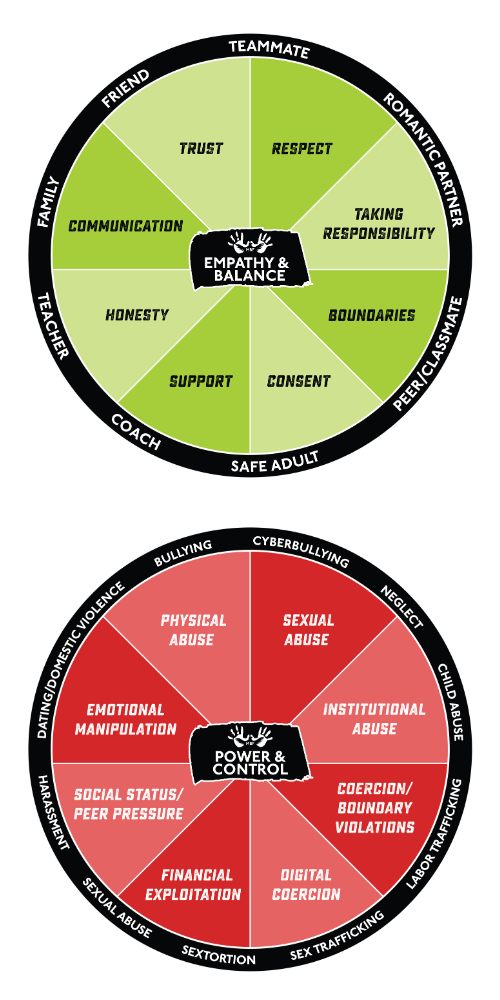
Some relationships can turn unhealthy, and it’s important to recognize the warning signs early. The MBF Relationships Wheels are a powerful tool that can help you learn how to continue building healthy relationships, both online and in real life.
Healthy vs Unhealthy Relationships
Healthy Relationships
The Healthy Relationship Wheel teaches the positive qualities that make relationships safe and supportive, like respect, kindness, trust, good communication, empathy, and balance. Just as a green traffic light signals “go,” these traits signal that a relationship is healthy.
Abusive Relationships
The Abusive Relationship Wheel shows how power and control can be used to harm others. When someone uses their power to limit another person’s freedom or well-being, it becomes abuse.
A person could have more power in a relationship if they are:
- Older than you
- Stronger/Taller
- Have more friends or social status
- More popular at school or online
- A person of authority (teacher, coach, youth leader, camp counselor)
- Have your private info (videos, pics, passwords)
- Can influence what others think about you
A person who takes advantage of their power and uses the abusive behaviors listed in the sections of the wheel is not someone safe. Recognizing these behaviors is key to keeping your relationships healthy, so you can Make A Move and Talk It Up with your Safe Adult.
You can also reach out to the Boys Town National Hotline (it’s for everyone!) at 800-448-3000 or text “VOICE” to 20121. There is always help available, and you are never alone.
Abuse can be difficult to spot sometimes. We don’t want to imagine that those who care about us would want to harm us. Watch Mia’s Story and use the Relationship Spectrum to see how the relationship changed over time, and how something romantic and trusting became a case of trafficking. (DHS Video by Blue Campaign/Released)
- Mia’s Story — https://www.dhs.gov/medialibrary/assets/video/27904
- The Relationship Spectrum (Printable PDF) — www.loveisrespect.org/wp-content/uploads/media/sites/3/2020/11/2020-LIR-Relationship-Spectrum-onepager.pdf
BODY SAFETY AND SETTING BOUNDARIES
One effective way to protect yourself and those you care about is to have a conversation where boundaries are clearly communicated.
A boundary can be an emotional, physical, or mental barrier that you choose to put in place with another person or a relationship you have in your life. We set boundaries to protect our mental and physical health, and it’s important to always respect others’ boundaries, as well as your own. Knowing your boundaries plays a key role in keeping your friendships and other important relationships happy and healthy.
Resources for Children
- My Body Belongs to Me: From My Head to My Toes (Virtual Book Reading) [Embed on page] — https://youtu.be/2Y3JHm524E4?si=DyeeRAmOgJiPTEz7
- The ABCs of Consent by Krystaelynne Sanders Diggs (For Pre-K to 3rd Grade) — https://www.youtube.com/watch?v=bPgAP8TNufA
- Protect Yourself Video Series (For K-3rd Grades) — https://fightchildabuse.org/k-3-video/
- Protect Yourself Video Series (For 4-6th Grades) — https://fightchildabuse.org/4-6-video/
Resources for Teens
- How to Set Healthy Personal Boundaries (Video): https://youtu.be/pC5FtPX6Ngg?si=_qOoqSbxZrgoBPZd
- Setting Boundaries (Blog) — https://mbfpreventioneducation.org/setting-boundaries/
- Protect Yourself Video Series (For Teens) — https://fightchildabuse.org/teen-video-pyr/
- Love is Respect: Romantic Relationship Boundaries — https://www.loveisrespect.org/resources/creating-boundaries-in-romantic-relationships/
Summer is a time for fun, friends, and adventure—but it’s also important to stay safe. By knowing how to protect yourself from unsafe situations, you can have a great summer and feel more confident. Always talk to a Safe Adult if something makes you feel uncomfortable or worried. Remember, being safe means being smart and strong. Have fun, make good choices, and enjoy every moment of your summer break!
Paid by OAG, GR-2025-Monique Burr Foundation for Children-00006