

Kindness isn’t just something we practice in the hallway — it’s something we practice in our texts, comments, and posts. This month, we’re asking every student, teacher, and family to Choose Kind, Click Kind, and to bring the same respect, empathy, and courage to their screens that they bring to their classrooms.
October reminds us that kindness has no off switch. Whether it’s in school or online, words and actions shape how safe, valued, and included others feel. Kindness is a choice we make everywhere we go—including everywhere we scroll, type, and post. This Bullying Prevention Month, let’s all commit to Choose Kind, Click Kind!
Why It Matters
Bullying and cyberbullying are a form of abuse that affects a student’s mental health, self-esteem, sense of belonging, and academic success. Creating a culture of kindness—both in person and online—helps every student feel safe, seen, and supported.
Bullying is unwanted, aggressive behavior that involves a real or perceived imbalance of power. It’s typically repeated over time, or has the potential to be repeated, and can take many forms:
- Physical — hitting, pushing, or damaging someone’s belongings
- Verbal — teasing, name-calling, or threatening
- Social/Relational — excluding someone on purpose, spreading rumors, or damaging relationships and reputations
Bullying can happen anywhere—in classrooms, hallways, cafeterias, buses, and on the playground—and it affects everyone involved: the person/group targeted, the person/group engaging in the behavior, and those who witness it.
Indicators of Bullying in Youth
- Frequent cuts or bruises
- Injuries without adequate explanation
- Voices frequent physical complaints
- Changes in sleeping/eating patterns
- Ripped/torn clothing upon return from school or other activity
- Missing items or valuables
- Suddenly reluctant to go to school or participate in sports/other activities
- Frequently loses money or other possessions
- Frequently spends time alone
- Seems sad or depressed
Cyberbullying is bullying that takes place using digital devices like phones, computers, and tablets—through texts, apps, social media, gaming platforms, or forums. It can include:
- Sending hurtful, threatening, or embarrassing messages
- Posting rumors, private information, or images without consent
- Impersonating someone online or excluding them from group chats and online spaces
- Repeated harassment through comments, tags, or direct messages
Cyberbullying can feel especially difficult because it can happen 24/7, reach a wide audience quickly, and often leaves a lasting digital footprint. But the same values that stop bullying in person—respect, empathy, and courage—apply just as powerfully online.
Indicators of Cyberbullying in Youth
- Spends large amounts of time online, especially at night or when alone
- Receives an excessive amount of email or text messages
- Quickly exits the computer or cell phone when a parent/caregiver approaches
- Suddenly withdrawn, anxious, or depressed
- Does not want to go to school or participate in age-appropriate activities/events
- Stay calm. Kids often make impulsive choices online that they wouldn’t make face-to-face.
- Ask questions to understand what happened rather than leading with punishment or consequences.
- Help them see the impact of their actions and support them in making it right (an apology, deleting a post, changing behavior going forward).
- Use it as a teaching moment about empathy, digital citizenship, and the “click kind” half of this month’s theme.
HOW CAN WE STOP AND PREVENT BULLYING?
MBF Prevention Education Programs teach youth about being UPSTANDERS instead of BYSTANDERS and how to apply the MBF 5 Safety Rules to take a stand against bullying.
A BYSTANDER is someone who stands by and watches bullying happen; sometimes, they even help the bully. An UPSTANDER is someone who sees bullying and stands up to the bully, stands up for and helps the person being bullied, or speaks out against bullying.
Explore the Toolkit
This toolkit gives our whole school community the resources to turn this month’s theme into everyday action. Below, you’ll find:
- Tips for recognizing and reporting bullying and cyberbullying
- Micro-lessons and resources for classrooms
- Conversation Guide for families
- Posters and worksheets featuring the Choose Kind, Click Kind theme
Paid by OAG, GR-2026-Monique Burr Foundation for Children-00006
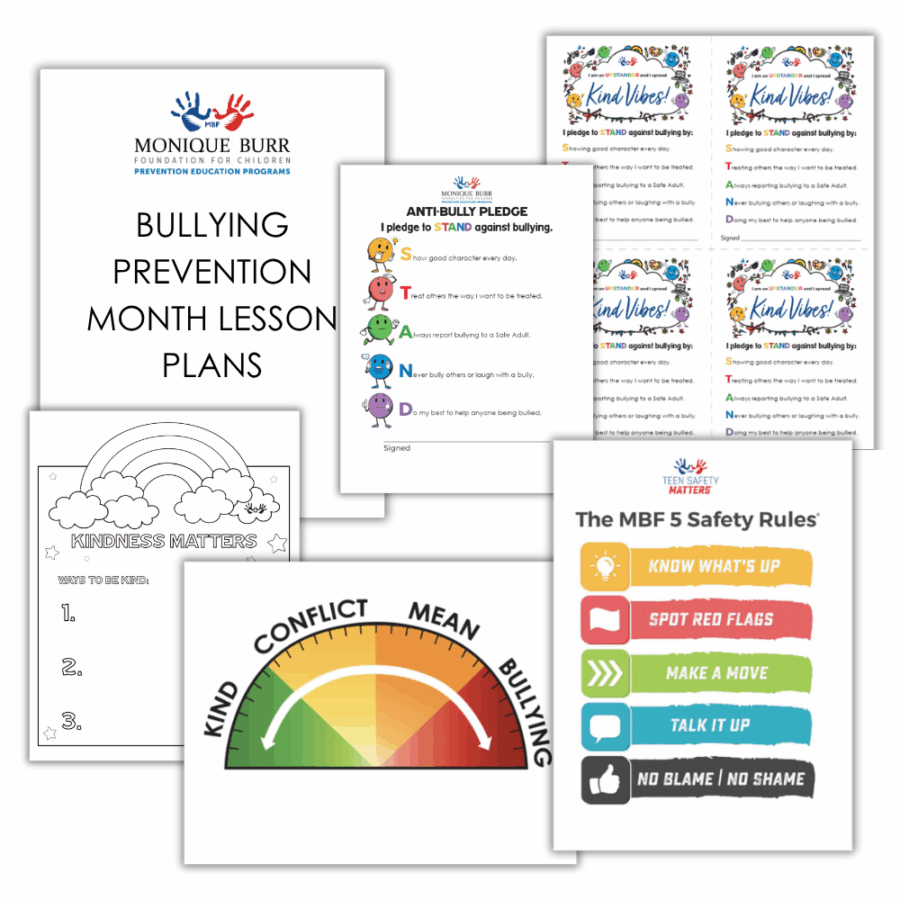
ACTIVITIES/STUDENT RESOURCES
- Coloring Sheets (Grades K-5)
- Safety Rules Coloring Sheet
- We Are Upstanders Coloring Sheet
- Be The Change Coloring Sheet
- Digital/Online Safety Coloring Sheet
- Anti-Bullying Pledge Coloring Worksheet
- Kindness Bingo – CSM (Grades K-5)
- Kindness Bingo – TSM (Grades 6-12)
- Pull Tab Poster (Grades K-5)
- Pull Tab Poster (Grades 6-12)
- National Bullying Prevention Center Student Activity Kit (Grades K-12)
- Student Action Plan Against Bullying Action Plan: English | Spanish
SCHOOL RESOURCES
SPIRIT WEEK RESOURCES AND IDEAS
World Day of Bullying Prevention (by STOMP Out Bullying™)
October 6th: Join STOMP Out Bullying™ in observing World Day of Bullying Prevention™. The goal: encourage schools, communities, and organizations to work together to stop bullying and cyberbullying and put an end to hatred and racism by increasing awareness of the prevalence and impact of all forms of bullying on all children of all ages.
Unity Day
Show that your school is united for kindness, acceptance, and inclusion by making it orange to help end bullying! Come together in one giant ORANGE message of hope and support, WEAR & SHARE ORANGE to color our nation, and even the world, visibly showing that our society believes that no child should ever experience bullying (pacer.org).
Kindness Landscaping
Have students paint rocks with inspiring messages of kindness. Place the stones around school grounds as landscaping decorations (or for other students to find randomly), creating a visual reminder of the importance and ripple effect of kind words (pacer.org).
Digital Citizenship Week takes place from October 19-23
In the age of AI, helping kids maintain their digital well-being has never been more important. For this year’s Digital Citizenship Week, Common Sense Media created brand-new, updated resources that address these issues with engaging activities that your students will enjoy. Promote digital literacy and citizenship in your classroom using these resources provided by Common Sense Media!
- Digital Citizenship Week calendars
- Fun, daily activities for each grade level, K–12!
- Live webinars and events
- Free self-paced PD courses
- Helpful resources for families