


The holiday season is for friends, family, and fun. During these exciting times, it’s important to remember that threats towards youth don’t take days off, especially digital dangers. Protecting youth is a year-round responsibility, and it is our job as Safe Adults to make sure, even amid the holiday chaos, we are still protecting our children online.
According to the 20222 Pew Research Center article, Teens, Social Media and Technology 2022, “…97% of teens say they use the internet daily.” Increased risk comes with increased use. The Monique Burr Foundation believes that educating youth is empowering the youth, and the more empowered a child feels, the more likely they are to Talk It Up and Make A Move if something they come across online is unsafe or makes them feel uncomfortable. With help from MBF, you can keep yourself and your family safe around the holidays with these four important digital safety tips —
1. PRIVACY ONLINE:
Holiday time means increased social time – on and offline. Wanting to share fond memories or funny moments on social media is naturally what we all tend to do during this season. Talking to your child about which things are safe and unsafe to share online is crucial for keeping them safe from predators, spam, or harassment in the digital world
Little changes in what kids post online can highly impact their online experience. Switching from a private to a public account, not accepting strangers’ follow requests, and not sharing geotags that reveal private street names or school names help keep you and your family away from digital dangers. We also encourage everyone to not share vacation photos until AFTER the vacation.
2. DIGITAL GROOMING:
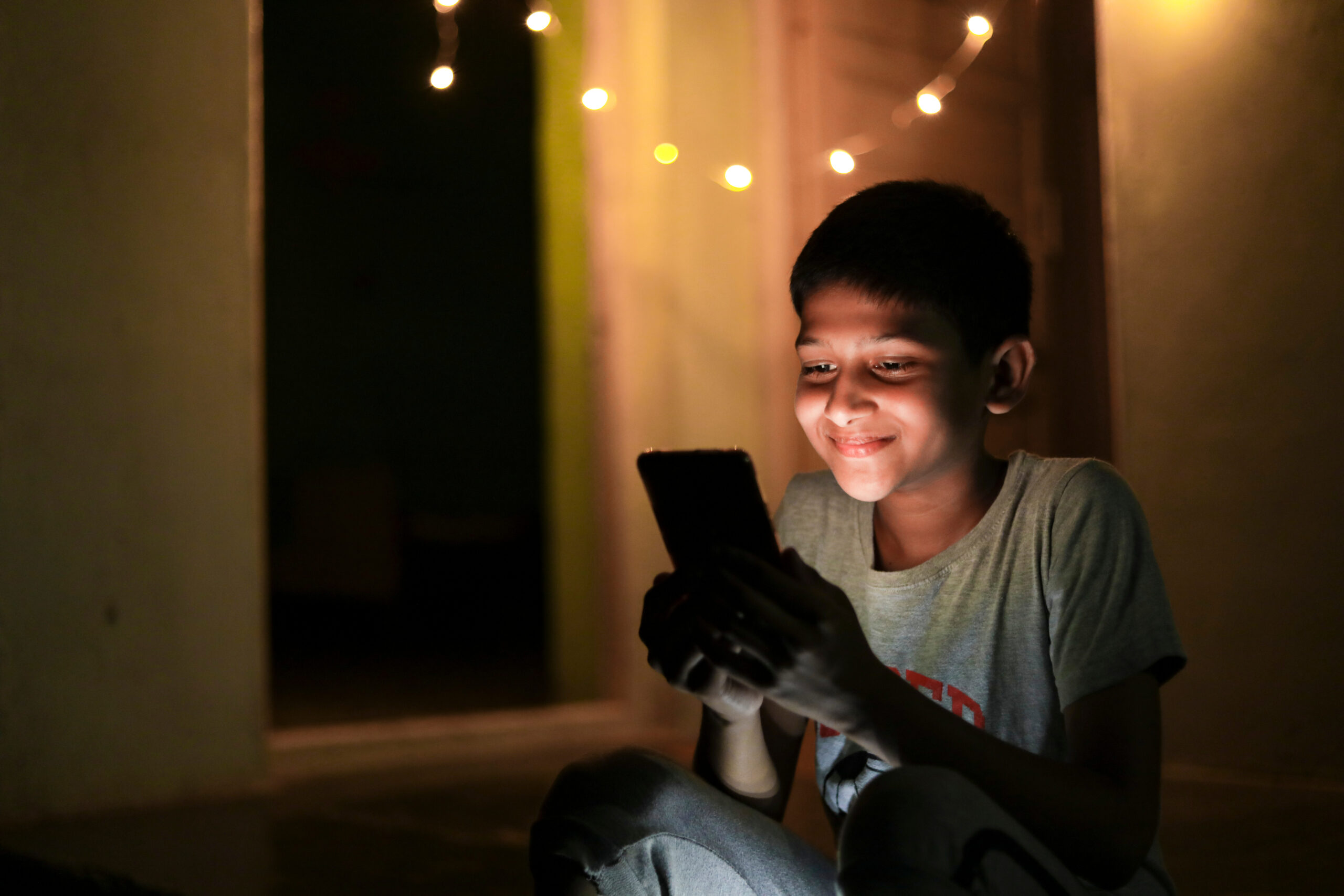
Your child is depending on you to keep them safe. Unfortunately, there are adults who take advantage of their responsibility and groom children. Being aware of the early signs of online grooming is one crucial way to keep a child safe from an unsafe adult this holiday season.
Some of those early signs that a child is experiencing grooming may include:
- Secrecy about online activity…
- Quickly change the subject or avoid talking about the internet at all.
- Emotional changes in behavior…
- Mood swings, anxious tendencies, or responses regarding digital and online use.
- Unexplained gifts…
- Random and unexpected packages your child may receive without proper explanation (cell phones, games, or other valuable items).
- New accounts or devices…
- When your child suddenly begins using a new social media account or email address.
- Talk of new or older friends online…
- If it isn’t someone you have met in real life, it’s crucial to investigate this person your child is talking about.
Knowing how to identify signs of grooming can change (and potentially save) a child’s life. Checking in every couple of weeks on your child to see how they are doing mentally, reassuring them that you are their Safe Adult, and keeping a line of communication open, could also help identify if someone is targeting them.
3. CYBERBULLYING PREVENTION:
As many as 1 in 6 adolescents have experienced a form of cyberbullying (World Health Organization, 2024). Teaching youth about good digital citizenship can help children understand how to be responsible, respectful, and safely use the internet.
Being kind and an online upstander comes with having good digital citizenship. An online upstander is someone who doesn’t re-post, comment, or like a post they see online about someone that would hurt their feelings. If an upstander sees a post making fun of a friend, they would report the post, block the user who made the post, then tell a Safe Adult to handle the situation.
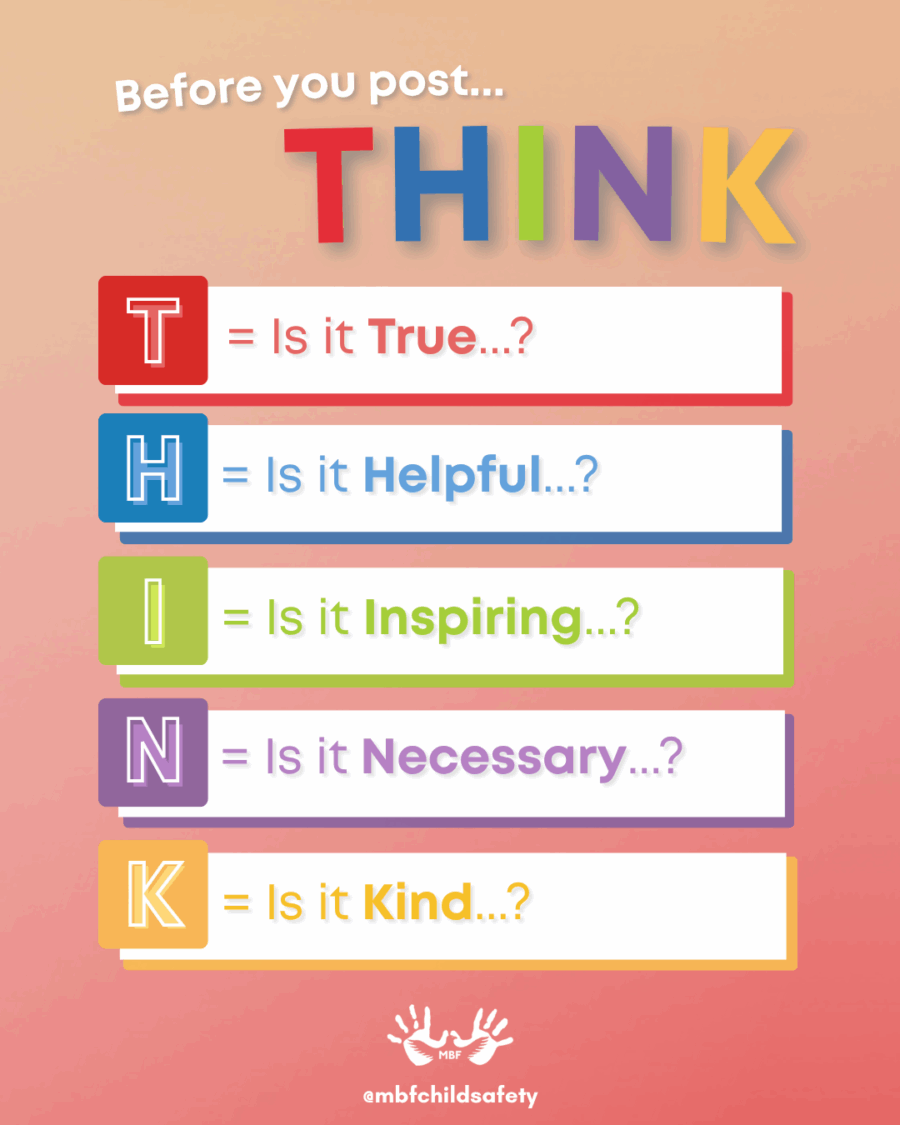
Another good rule of thumb to use before sharing online is to T.H.I.N.K. …
T – Is it True?
H – Is it Helpful?
I – Is it Inspiring?
N – Is it Necessary?
K – Is it Kind?
Pictures and comments online last forever, including the mean ones. Remind youth that if they wouldn’t say it to the person’s face, don’t text it to them, don’t publicly post about it, and don’t like posts talking about it. Being a kind friend to others is FREE and EASY to do.
To learn more about cyber cruelty, visit: https://mbfpreventioneducation.org/resource/cyberbullying-and-digital-safety/
4. UTILIZE THE MBF 5 SAFETY RULES©
The MBF 5 Safety Rules© are taught to children and teens through MBF Prevention Education Programs. The Safety Rules are strategies designed to help youth prevent, recognize, and respond to abuse, bullying, and other types of victimization. The MBF 5 Safety Rules are as follows:
- Safety Rule #1 – Know What’s Up
- Safety Rule #2 – Spot Red Flags
- Safety Rule #3 – Make A Move
- Safety Rule #4 – Talk It Up
- Safety Rule #5 – No Blame | No Shame
Learn more about the MBF 5 Safety Rules by visiting: https://mbfpreventioneducation.org/mbf-5-safety-rules/
–
During this busy time of the year, remember to check in on your family and let your child know they can always talk to you and ask you about anything that has made them uncomfortable. Remember to never respond with an extreme temper if your child shares an unsafe experience they encountered. It is so important for parents to respond carefully to encourage future open communication and make the child feel safe and supported.
Keeping your family safe is an ongoing conversation with two-way communication between you and your youth. Give them the best gift of all this holiday season— the gift of safety!
Happy holidays, from MBF.

